
How to Build an Agent-Ready Accounting Platform
A practical guide for product teams that want AI systems to work with accounting workflows without sacrificing control.
Evaluating this for a platform, firm, or fintech product? Explore our embedded accounting infrastructure overview

Plenty of companies want AI to help with finance operations. Fewer are ready for AI to interact with those operations in a dependable way.
If you want an accounting platform to become agent-ready, the real work starts before the agent arrives.
This post reflects the platform-design patterns NewLedger considers important for agent-ready accounting systems as of April 24, 2026 and is reviewed by the NewLedger Product Team.
Step 1: Structure The Workflow Before You Automate It
Agents work best when the system already knows what the workflow is.
That means your platform should have explicit states for:
- drafting
- review
- approval
- posting
- exception handling
- reconciliation follow-up
If those steps are informal today, AI will only amplify the ambiguity.
What Agent Readiness Should Look Like In Practice
Teams should be able to see agent readiness in concrete workflow behavior, not only in roadmap language.
A strong starting point usually includes:
- workflow states that are explicit enough for operators and AI agents to interpret
- draft-first actions rather than silent background posting
- reporting that reflects the same accounting source of truth as the workflow
- permissions and review boundaries around sensitive actions
- visible activity after AI-assisted operations
Those are the kinds of signals that turn an AI ambition into a platform capability.
Step 2: Make The Accounting Outcome Predictable
An agent-ready platform needs more than workflow screens. It needs consistent accounting consequences behind those actions.
For example:
- what happens when a sale is approved?
- what changes when an expense is posted?
- how does a purchase workflow affect balances or reports?
If the answer depends on tribal knowledge or side processes, the platform is not ready yet.
Step 3: Keep Reporting Close To The Workflow
Agents need context.
If reporting lives far away from the operational workflow, the system cannot easily explain:
- why a number changed
- what triggered it
- what should happen next
Agent-ready platforms keep reporting close to the same accounting source of truth that powers the workflow.
Step 4: Build Around Permissions And Review
AI in accounting should not mean unrestricted action.
The platform needs:
- role-based permissions
- approval boundaries
- review checkpoints
- audit history
This is one of the biggest differences between generic automation and finance-grade automation.
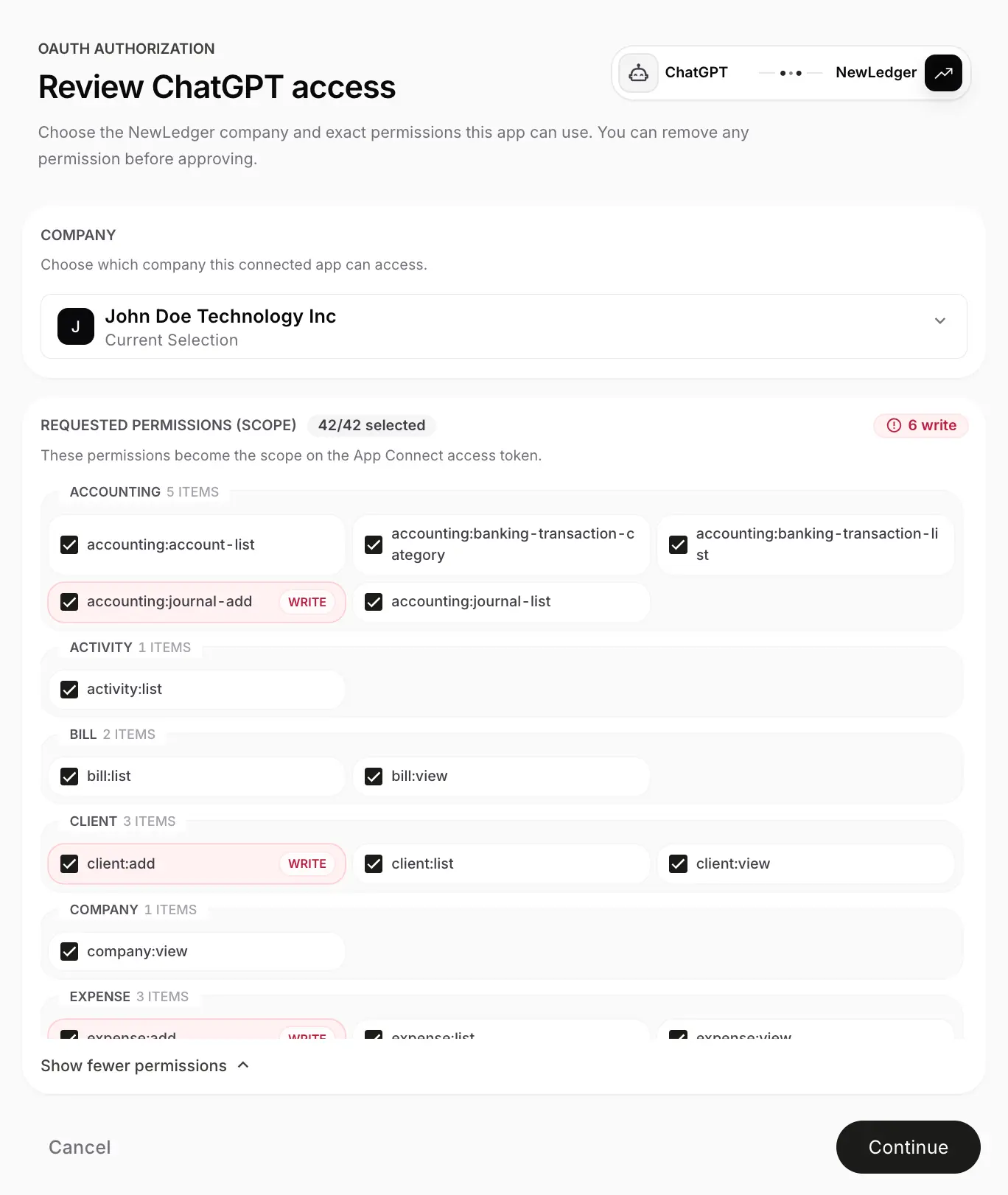
Approval and consent are part of the product design, not a detail to bolt on after the agent layer exists.
Step 5: Expose Structured Capabilities, Not Just Raw Endpoints
A platform becomes far more agent-ready when it can expose capabilities in a structured way.
This is where MCP-style thinking becomes useful.
Instead of forcing agents to work against scattered APIs or indirect interfaces, teams can prepare a clearer interaction layer around:
- workflow retrieval
- finance context
- allowed actions
- governed output
Example Capabilities Teams Can Evaluate
A platform starts to feel agent-ready when teams can evaluate capabilities such as:
- consent-based connection setup
- tool discovery for governed accounting actions
- journal and reporting context retrieval
- draft invoice or draft expense creation
- activity visibility for reviewable operations
These are practical indicators that the product can support AI-agent workflows without giving up control.
Step 6: Start With Narrow Operational Use Cases
The best agent-ready finance products usually begin with a narrow scope.
Good starting points include:
- expense review support
- purchase workflow assistance
- reporting context retrieval
- exception summarization
- draft action preparation
These are practical, lower-risk places to prove value.
What An Agent-Ready Embedded Accounting Platform Looks Like
When this is done well, the result is not just a product with AI.
It is a platform where:
- accounting lives inside the product
- workflows are structured
- reporting is coherent
- controls are visible
- AI systems can assist responsibly
That is the real opportunity behind AI-ready embedded accounting.
Where NewLedger Fits
NewLedger is built for teams that want embedded accounting to become a dependable platform layer rather than a thin feature set.
That includes support for:
- structured workflows for sales, purchases, and expenses
- embedded accounting infrastructure
- reporting and reconciliation
- finance-safe controls
- AI-ready workflow design
- future MCP-oriented interaction models
Closing Thought
An agent-ready accounting platform is not created by attaching AI to a fragile process.
It is created by building the finance workflow, controls, and accounting structure that AI can work with responsibly.
Read Next In This Series
- For the broader infrastructure view, read AI-Ready Embedded Accounting.
- For the trust and structure argument, read Why AI Agents Need Structured Accounting Infrastructure.
- For the MCP release story, read NewLedger MCP Is Now Available for AI Agents and Accounting Workflows.