
AI-Ready Embedded Accounting
What it means to build embedded accounting that AI agents, operators, and finance teams can actually work with safely.
Evaluating this for a platform, firm, or fintech product? Explore our embedded accounting infrastructure overview

AI is changing how software teams think about operations. It is also changing what customers expect from products that manage money, workflow, and financial data.
That shift is creating a new requirement: AI-ready embedded accounting infrastructure.
For platform teams, fintech operators, and vertical SaaS companies, the question is no longer only whether accounting should live inside the product. The question is whether that accounting layer is structured well enough for automation, assistants, and AI agents to work with it safely.
This post reflects the product and workflow patterns NewLedger considers important for AI-ready embedded accounting as of March 26, 2026 and is reviewed by the NewLedger Product Team.
What AI-Ready Embedded Accounting Means
AI-ready embedded accounting is not just back-office tooling with AI features.
It means the accounting layer inside a product is built in a way that supports:
- structured workflows
- traceable records
- reliable financial state
- governed actions
- predictable interfaces for automation and agents
In other words, AI readiness starts with the accounting foundation itself.
If the system is built on disconnected exports, manual clean-up, and loosely defined finance logic, AI only makes that mess faster.
What Teams Should Be Able To Verify
If a product claims to be AI-ready for embedded accounting, teams should be able to verify more than a marketing message.
In practice, they should be able to see:
- a real accounting source of truth behind the workflow
- clear workflow states that an operator or AI agent can interpret
- reporting generated from the same accounting foundation
- role and approval boundaries around sensitive actions
- a structured interface layer that can expose accounting capabilities safely
That is the difference between an AI feature and an AI-ready accounting system.
Why This Matters Now
Many software products already support:
- payments
- invoicing
- purchasing
- expenses
- approvals
- reporting
But those workflows often stop short of real accounting coherence. The product captures activity, while the actual books are maintained somewhere else.
That approach breaks down when teams want AI to help.
An agent cannot reliably assist with finance work if:
- there is no dependable ledger model
- workflows do not map consistently into accounting state
- reporting comes from disconnected logic
- permissions and controls are unclear
That is why AI readiness is becoming an accounting infrastructure question, not just an interface question.
The Difference Between AI Features And AI-Ready Infrastructure
There is an important distinction.
AI Features
These might include:
- invoice drafting
- document summarization
- receipt extraction
- anomaly suggestions
- workflow recommendations
Those can be useful. But they do not make the system AI-ready by themselves.
AI-Ready Infrastructure
This means the underlying accounting layer is stable and structured enough that AI can assist without creating chaos.
That usually requires:
- a real double-entry foundation
- journalized financial changes
- structured states for workflow actions
- clear permissions
- audit history
- consistent reporting logic
Without those elements, AI becomes an overlay on top of a fragile finance system.
The Core Components Of AI-Ready Embedded Accounting
1. A Ledger That Preserves Financial Truth
If the accounting layer cannot explain balances, entries, and changes over time, AI has no reliable source of truth to work from.
That means the product needs more than activity tables. It needs a proper accounting model with journals, accounts, balances, and historical consistency.
2. Structured Workflows
AI works better when workflows are explicit.
For embedded accounting, that includes:
- sales workflows
- purchase workflows
- expense workflows
- approval states
- posting rules
- reconciliation steps
If the product already models those clearly, automation and agents can interact with them in a controlled way.
3. Reporting From The Same Source Of Truth
AI-generated explanations or recommendations are only useful if the numbers are trustworthy.
That is why reporting should come from the same accounting source of truth as the workflow itself, not from separate downstream calculations stitched together later.
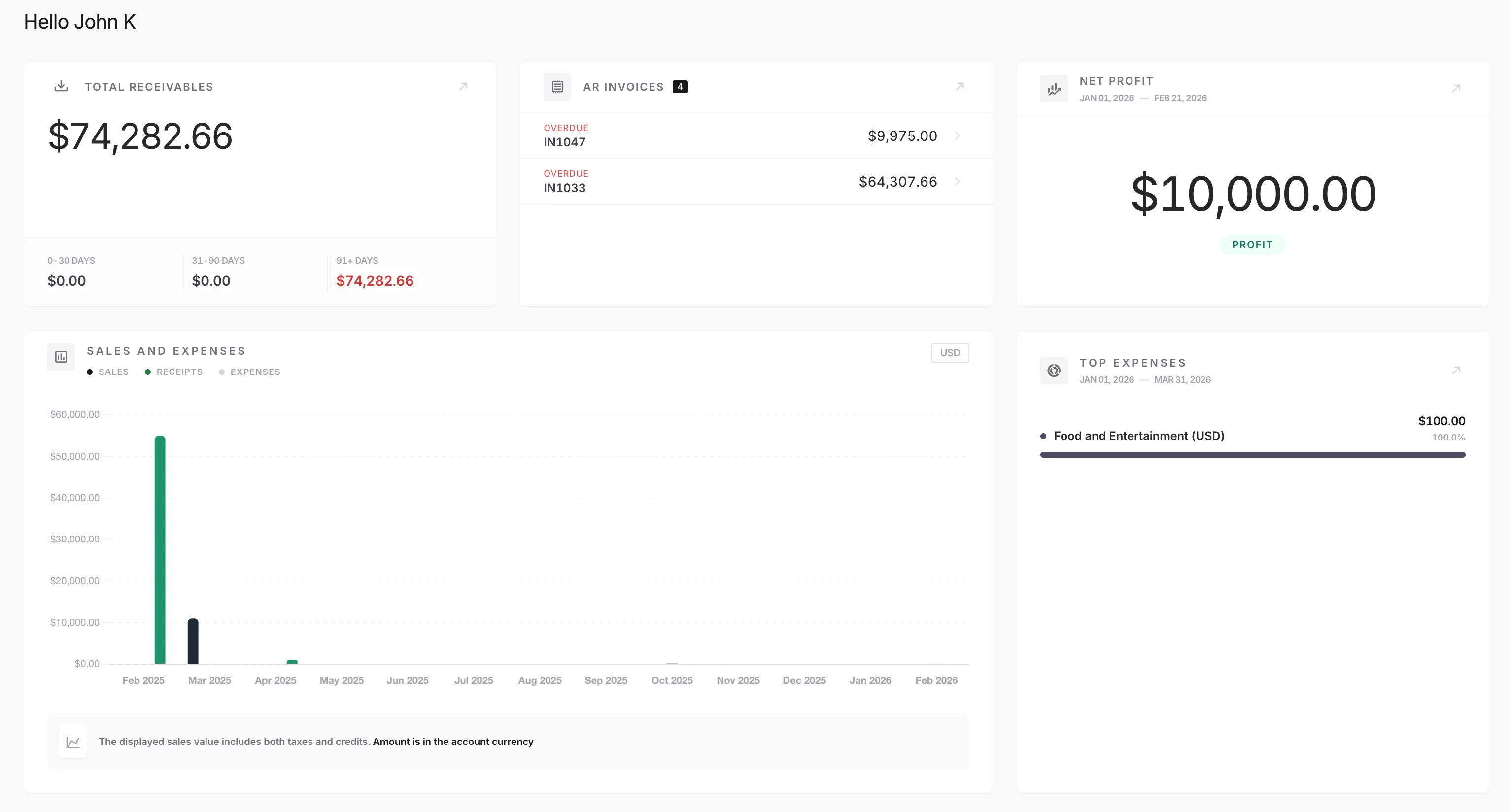
A reporting layer built from the same accounting source of truth gives operators and future AI workflows a much safer foundation to work from.
4. Controls And Auditability
AI in finance must operate inside rules.
Teams need to know:
- what the agent suggested
- what the system changed
- who approved it
- what data it relied on
That is why auditability and controlled workflows matter so much in AI-ready accounting.
Where Embedded Accounting And MCP Start To Connect
As more companies explore agent-based workflows, they need a safer way for those agents to interact with product capabilities.
That is where structured interfaces such as MCP become relevant.
An MCP layer can give AI systems a governed way to:
- inspect accounting context
- trigger approved workflows
- retrieve structured finance data
- work within the boundaries of the platform
This is much stronger than letting AI improvise against spreadsheets, email threads, or undocumented internal tools.
Example Signals Of AI-Ready Embedded Accounting
The strongest signs usually look practical, not theoretical:
- journals that can be reviewed as part of workflow context
- reporting that explains the same state the workflow produced
- draft finance actions instead of invisible background changes
- explicit consent and scoped access for AI-connected tools
- visible activity history for reviewable operations
Those signals matter because they show the system is designed for dependable interaction, not just surface-level automation.
What Product Teams Should Evaluate
If your roadmap includes embedded accounting and AI-assisted workflows, evaluate whether your platform can support:
- ledger integrity
- structured workflow states
- finance-safe automation
- role-based actions
- traceable changes
- agent-accessible interfaces
Those are the real building blocks of AI-ready embedded accounting.
Where NewLedger Fits
NewLedger is built for teams that want accounting to live inside the product and evolve into a more intelligent finance layer over time.
That includes support for:
- embedded accounting foundations
- sales, purchases, and expense workflows
- reporting and reconciliation
- controls and audit-friendly history
- AI-ready patterns for future agent-driven workflows
- MCP-style extensibility as teams move toward structured AI operations
Closing Thought
The next generation of software products will not just embed financial workflows. They will make those workflows usable by AI in a way that is dependable, governed, and finance-safe.
That future starts with the accounting infrastructure itself.
Read Next In This Series
- If you want to understand why structure matters so much, read Why AI Agents Need Structured Accounting Infrastructure.
- If you want the MCP angle next, read MCP for Embedded Accounting Infrastructure.
- If you want to see the release story, read NewLedger MCP Is Now Available for AI Agents and Accounting Workflows.