
MCP for Embedded Accounting Infrastructure
Why structured interfaces matter when AI systems start interacting with ledger-backed accounting workflows, reporting, and operational finance tools.
Evaluating this for a platform, firm, or fintech product? Explore our embedded accounting infrastructure overview

As AI systems become more capable, software teams are asking a new question:
How should agents interact with real product workflows safely?
In embedded accounting infrastructure, that question matters even more. Finance workflows are sensitive, stateful, and difficult to improvise around. That is why structured interfaces such as MCP are becoming more relevant.
This post reflects the MCP patterns and workflow controls NewLedger considers important for embedded accounting infrastructure as of April 28, 2026 and is reviewed by the NewLedger Product Team.
Why Embedded Accounting Infrastructure Needs A Better AI Interface Layer
Most accounting-related systems were not designed with agent interaction in mind.
They may expose APIs, but APIs alone do not solve the deeper problems:
- how should AI discover the right action?
- what context should it receive?
- what controls should it respect?
- how do we prevent risky or ambiguous behavior?
Accounting infrastructure needs more than raw connectivity. It needs a structured interaction model.
What Teams Should Look For Right Away
When evaluating MCP in accounting infrastructure, teams should be able to confirm practical workflow behavior, not just protocol support.
That means asking whether the system already supports:
- explicit consent and connection setup
- discovery of available accounting tools
- retrieval of real finance context
- draft-first actions for sensitive workflows
- visible activity after AI-assisted operations
Those signals make MCP feel real because they show how the interface behaves around actual accounting work.
What MCP Changes
MCP helps define a clearer contract between AI systems and software capabilities.
For accounting workflows, that means agents can work with tools in a way that is:
- more structured
- easier to govern
- easier to reason about
- easier to extend over time
This is important because finance operations are not just about generating text. They are about working with state, approvals, records, and reporting consequences.
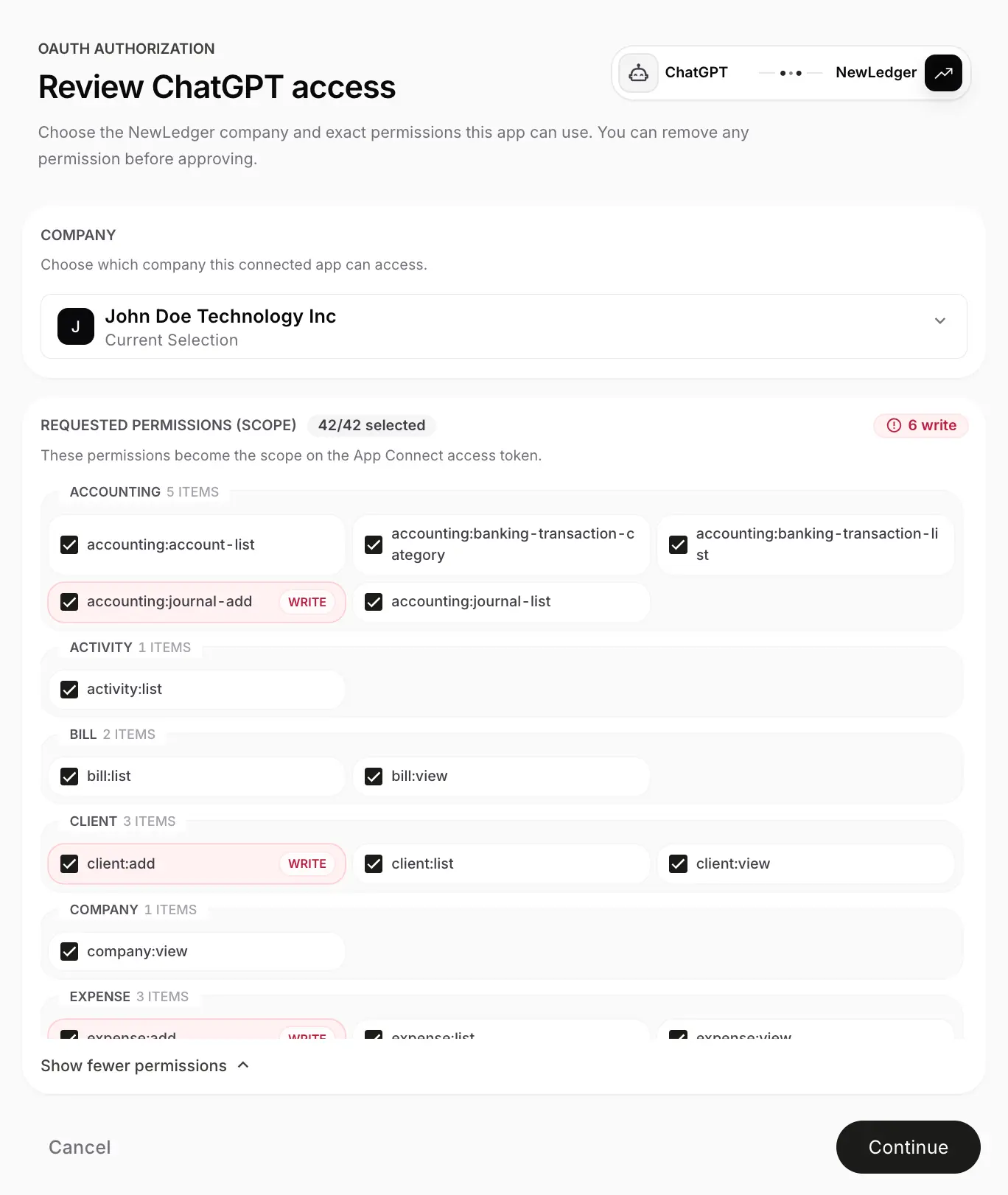
Consent should stay explicit. A governed AI workflow starts with clear authorization, not hidden access.
The Difference Between AI Chat And AI Operations
Many teams begin with a chat-style interface. That can be useful for discovery or assistance.
But accounting workflows quickly demand more.
For example:
- retrieving open expenses
- identifying an approval bottleneck
- surfacing unmatched entries
- preparing a purchase-related action
- explaining how a workflow affected reporting
Those are operational interactions, not just conversational ones.
That is where MCP becomes more interesting than a simple assistant wrapper.
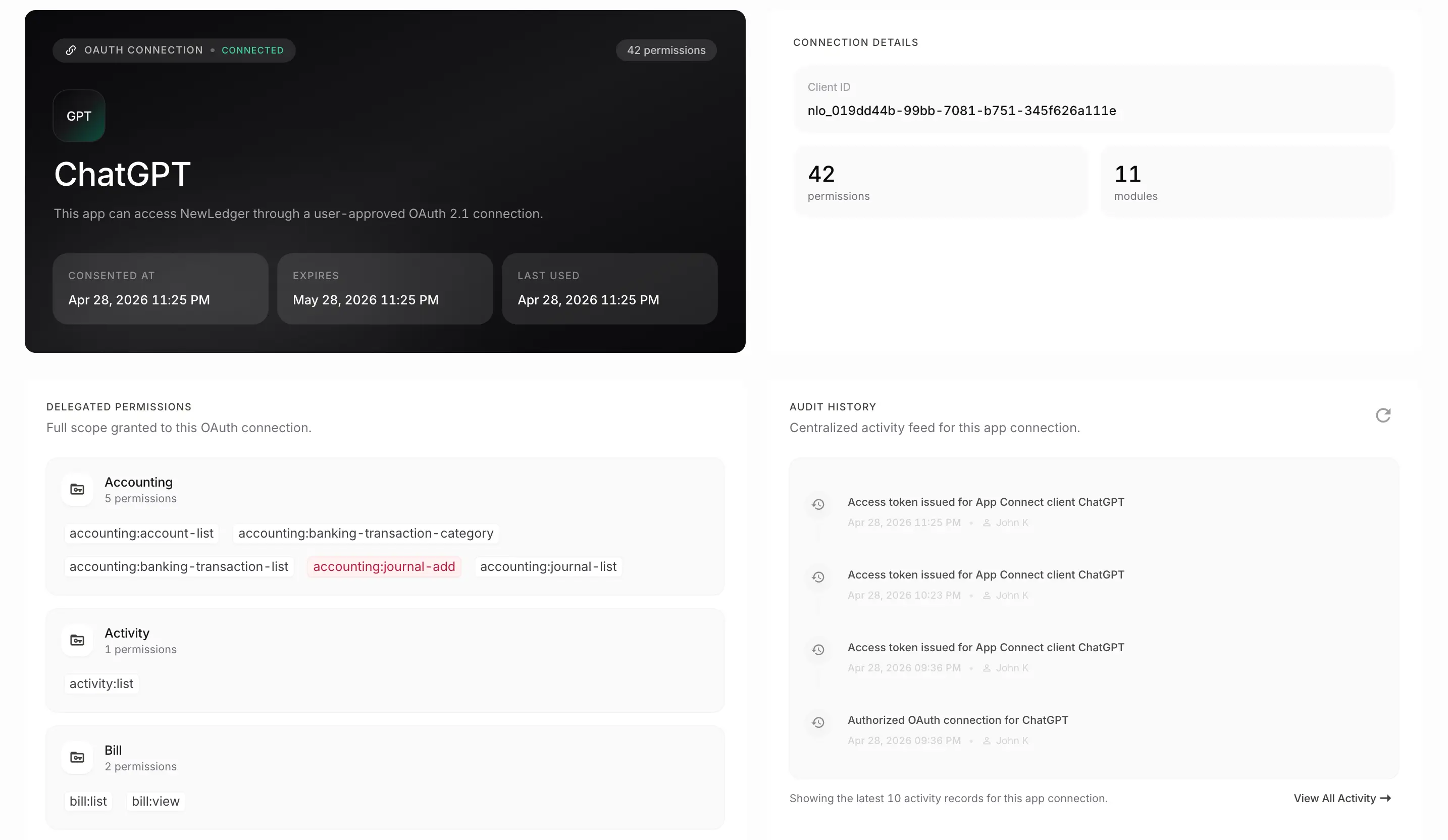
Connection details matter because agent access should be structured, reviewable, and tied to a known integration context.
Example MCP Capabilities That Matter
For accounting infrastructure, useful MCP support usually starts with capabilities such as:
- reviewing recent journals and finance context
- preparing draft invoices or draft expenses
- discovering the tools a given connection is allowed to use
- keeping activity visible to operators
That is a stronger starting point than promising full automation before the trust boundaries are in place.
Why This Connects Directly To Embedded Accounting
Embedded accounting brings finance workflows into the product itself.
That means the software can expose structured, product-native capabilities such as:
- sales operations
- purchases
- expenses
- reporting views
- approvals
- reconciliation context
When those workflows exist inside the product, MCP can become the layer that makes them usable by AI systems in a more controlled way.
This is one of the strongest reasons to think about MCP and embedded accounting together.
What Product Teams Should Look For
If you are evaluating whether accounting infrastructure is ready for agent-driven workflows, look beyond marketing language.
Ask whether the system supports:
- structured workflow actions
- clear accounting state
- reliable reporting context
- permission-aware operations
- audit-friendly execution
- extensibility for future AI tooling
Without those elements, MCP is just a technical concept sitting on top of fragile finance operations.

A journal listing makes the MCP story concrete: this is not generic AI chat, but real interaction with accounting infrastructure.
The Best Use Cases Start Narrow
MCP does not need to begin with fully autonomous accounting.
A practical starting point is usually:
- agent-assisted retrieval
- workflow preparation
- exception surfacing
- reporting context
- guided operational actions
Those use cases deliver value while keeping the finance system controlled.
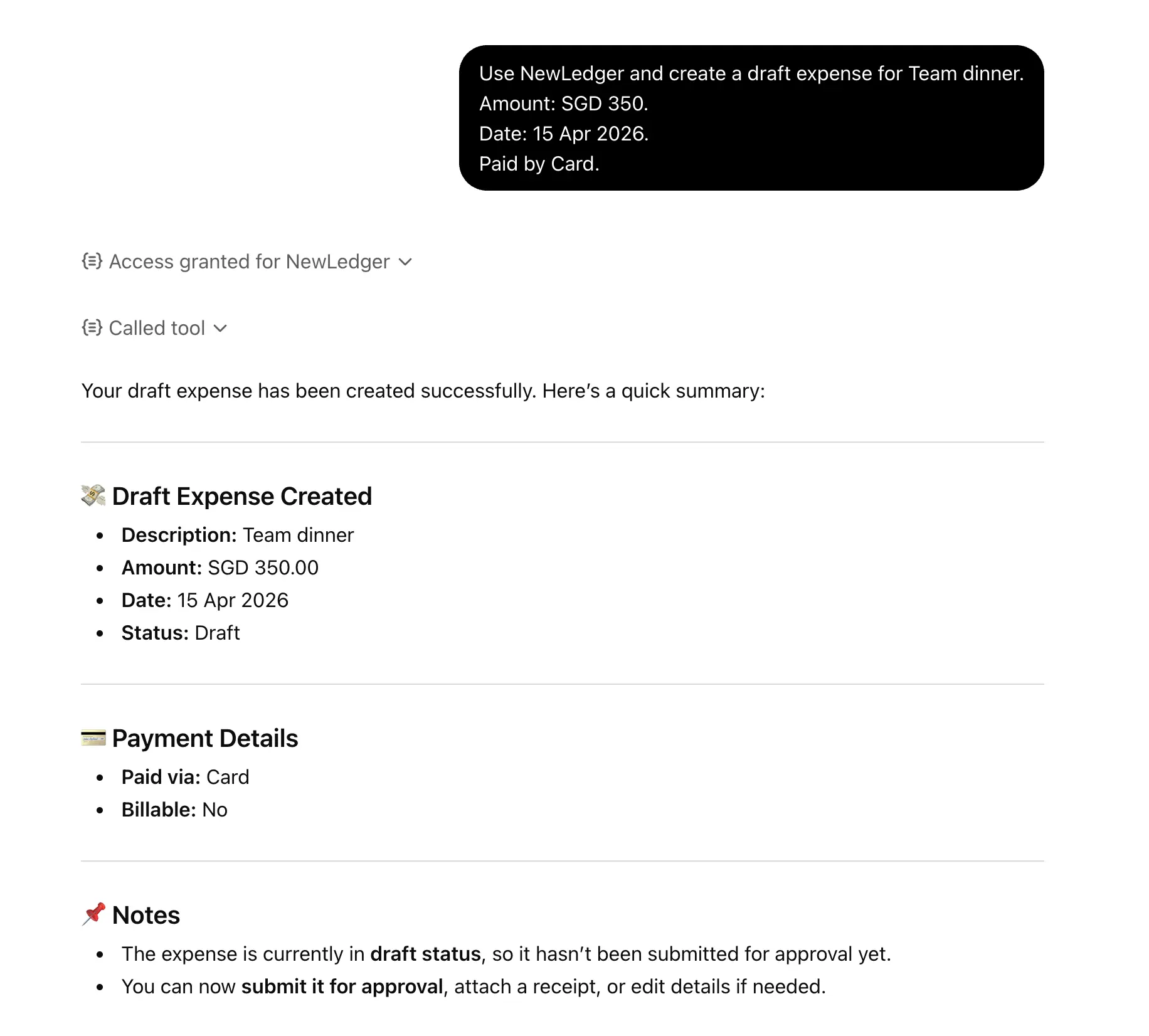
Draft expense creation is a practical MCP example because it shows AI assisting with a real finance workflow inside structured accounting boundaries.
Where NewLedger Fits
NewLedger is now available for teams that want embedded accounting infrastructure to support both human operators and AI-assisted workflows.
That includes:
- structured accounting workflows
- ledger and reporting foundations
- support for sales, purchases, and expenses
- controlled finance operations
- AI-ready product architecture
- MCP-based interaction patterns for accounting workflows that teams can start exploring today
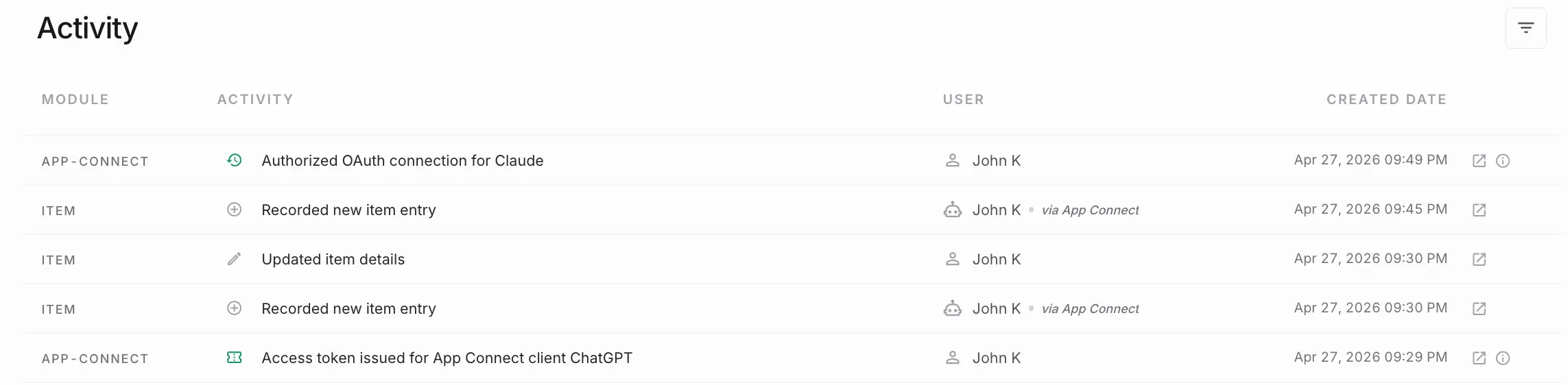
Visibility into agent activity is part of what makes AI-ready accounting more trustworthy. Operators still need to see what happened and why.
What Is Available Now
Today, teams can use NewLedger MCP around structured accounting workflows such as:
- journal visibility
- draft invoice creation
- draft expense creation
- governed connection and consent flows
- agent activity visibility for reviewable operations
That matters because AI readiness is more credible when it is tied to real workflow access, explicit authorization, and visible operational history.
Closing Thought
MCP matters for embedded accounting infrastructure because finance operations need more than access. They need structure.
The winners in AI-ready accounting will not be the products with the loudest AI claims. They will be the ones that make AI interaction safe, predictable, and useful.
Read Next In This Series
- For the infrastructure foundation, read AI-Ready Embedded Accounting.
- For the platform-design angle, read How to Build an Agent-Ready Accounting Platform.
- For the release post, read NewLedger MCP Is Now Available for AI Agents and Accounting Workflows.