
Connected
One accounting core
Keep the Ledger at the Centre
Invoices, bills, expenses, journals, and bank activity stay connected to the accounts and periods they affect.
Manage invoices, expenses, and reporting in one connected ledger.
14-day free trial · no credit card required.

NEWLEDGERAccounting system
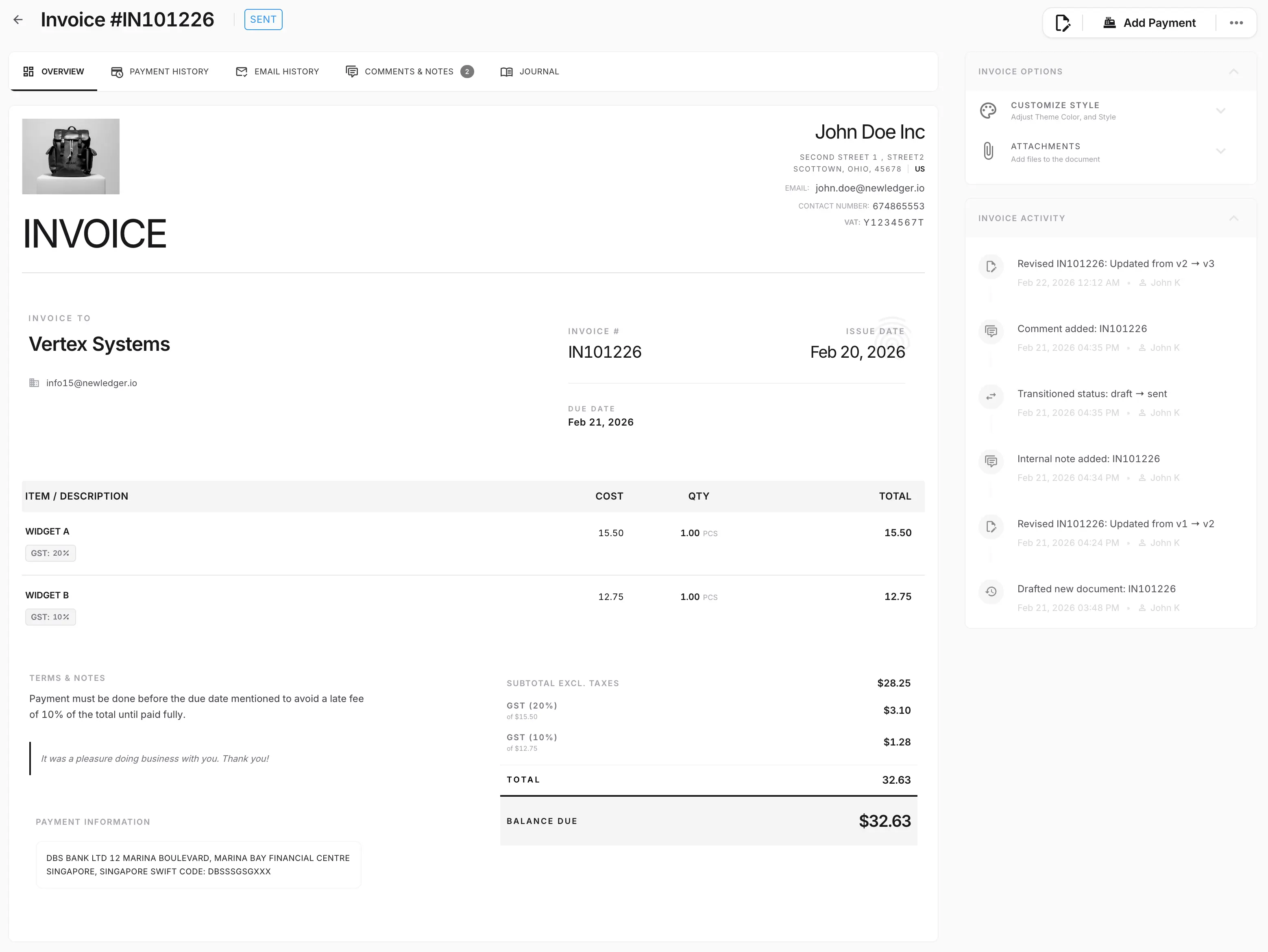
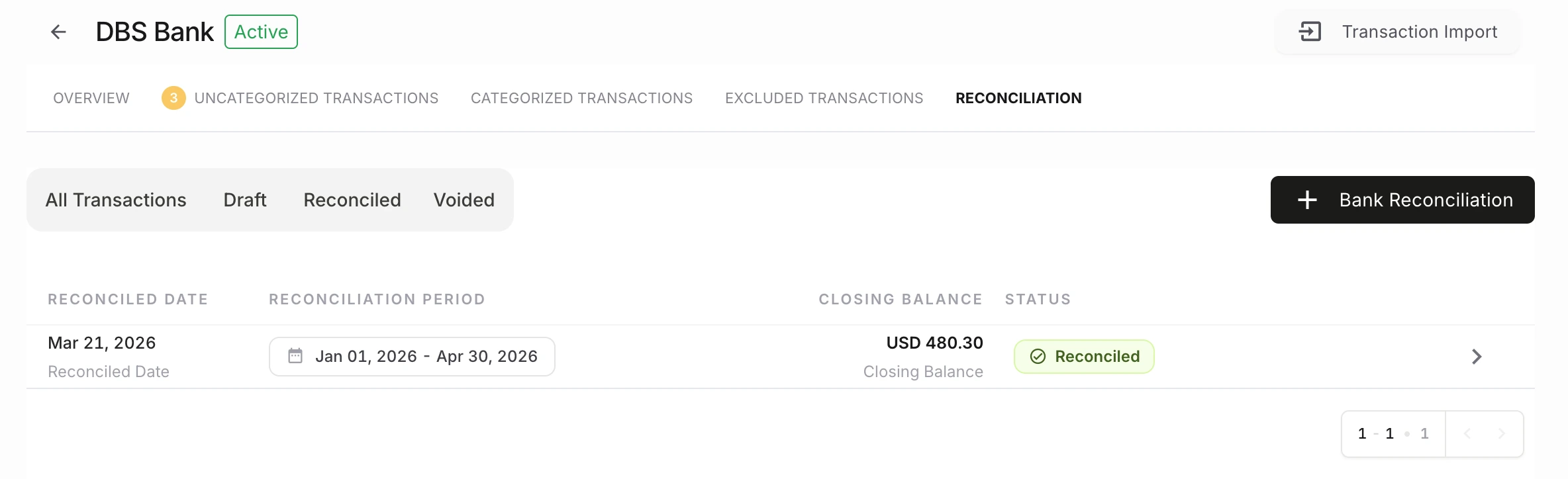
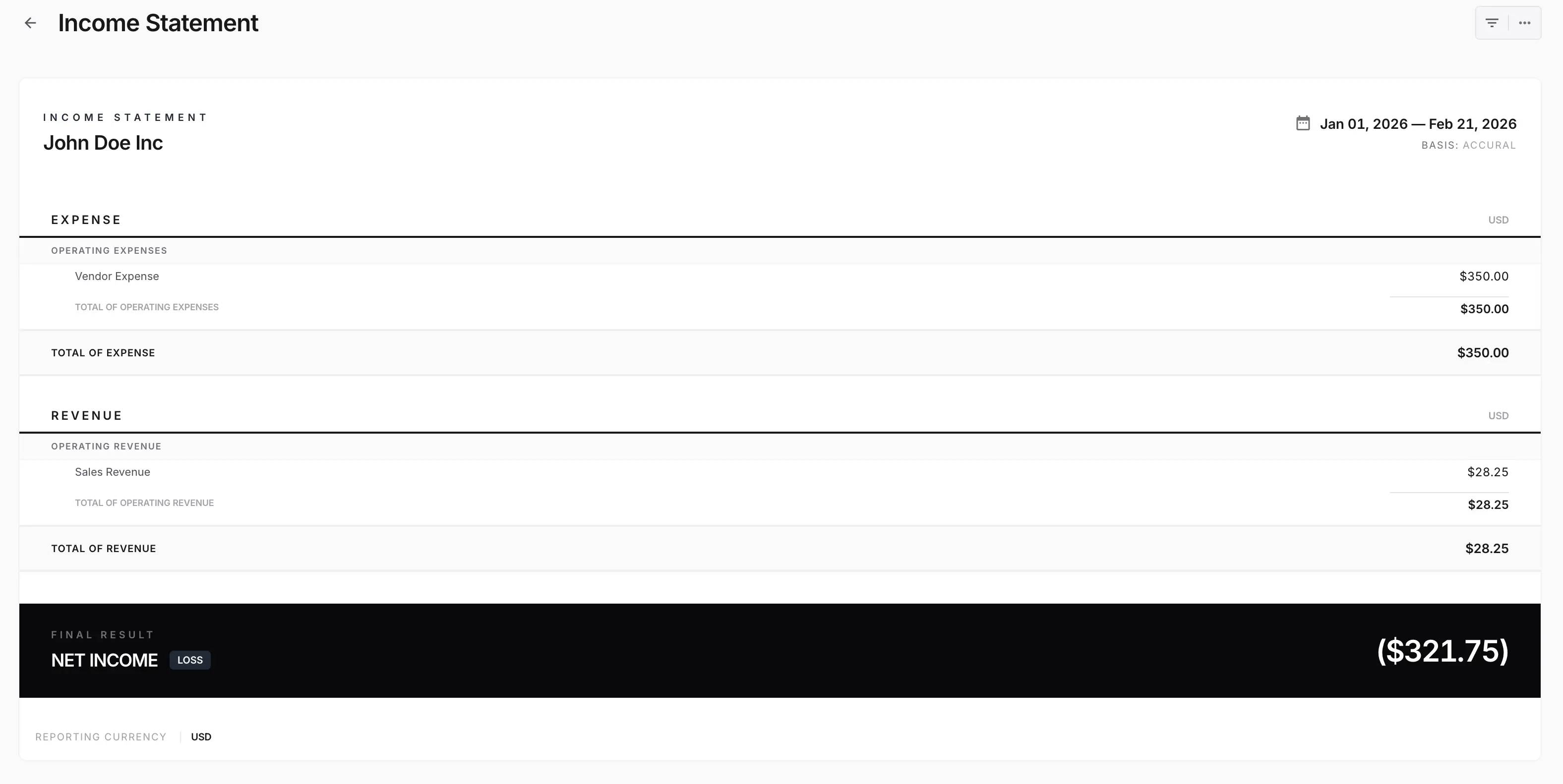
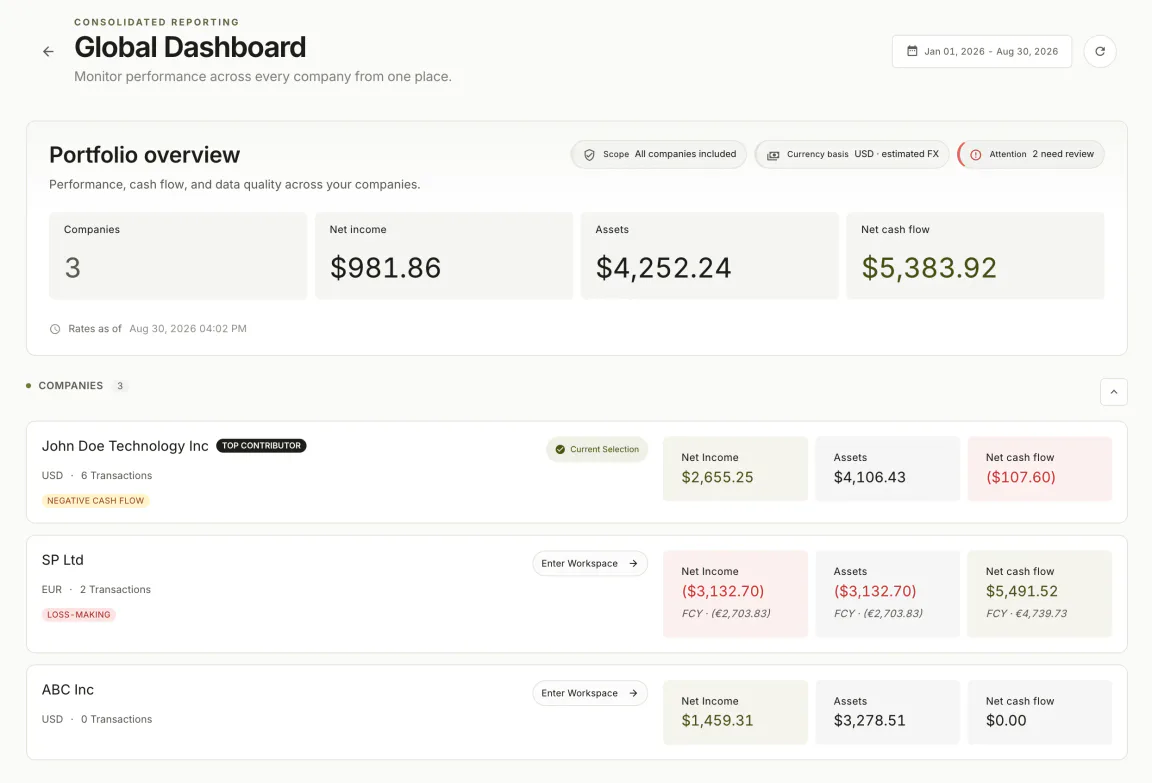
Record once Review in context Report from the books
NewLedger keeps transactions, review controls, and financial reports in one accounting system. Teams spend less time rebuilding context between tools and more time working from records they can inspect.
One accounting core
Invoices, bills, expenses, journals, and bank activity stay connected to the accounts and periods they affect.
Controlled work
Permissions, approvals, and record history keep material accounting work visible to the people responsible for it.
Current reporting
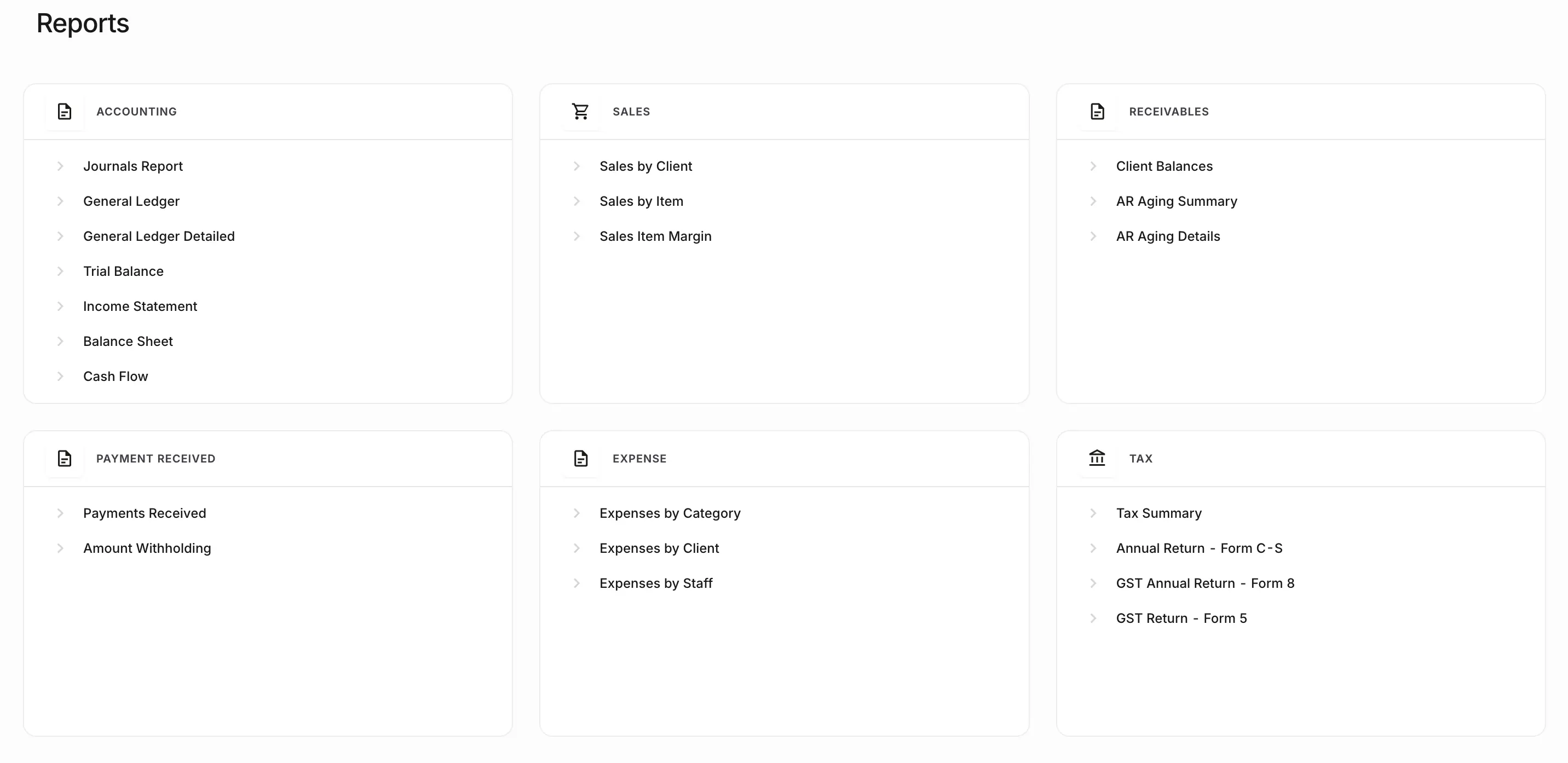
P&L, balance sheet, cash flow, and ledger detail come from the same accounting records the team maintains and reviews.
Each workflow contributes to the same accounting record. Separate entities and client organisations retain distinct books while authorised teams work through a consistent product.
Close is review plus judgement. The ledger has to hold the trail; adjacent products do not replace it.
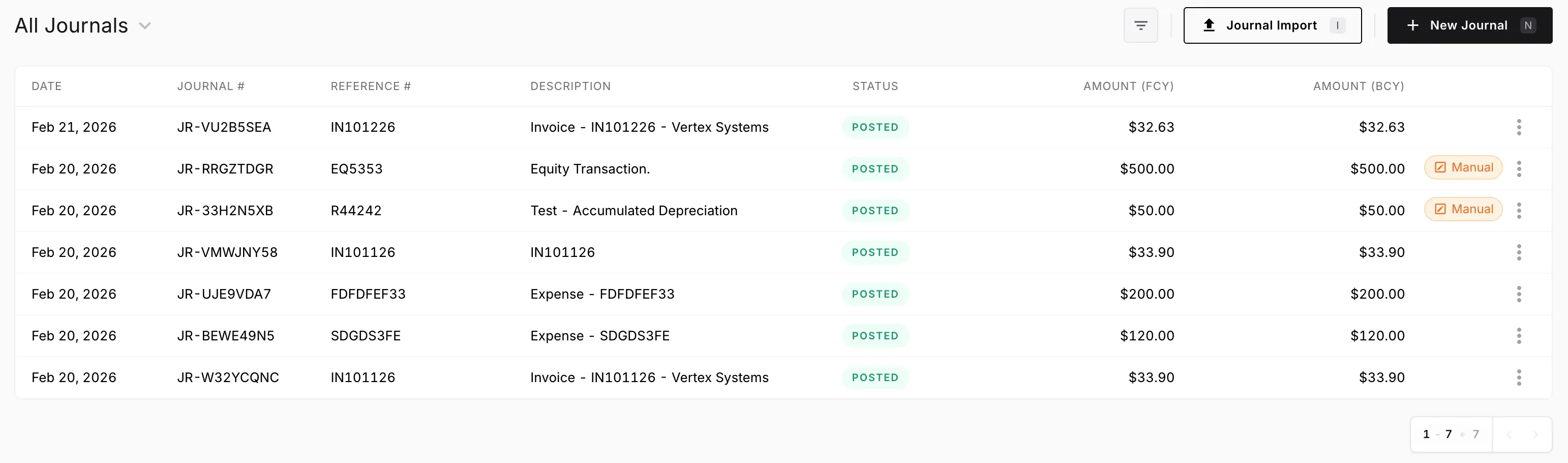
Create invoices, capture expenses, post journals, and keep each transaction attached to the right account, entity, project, and period.
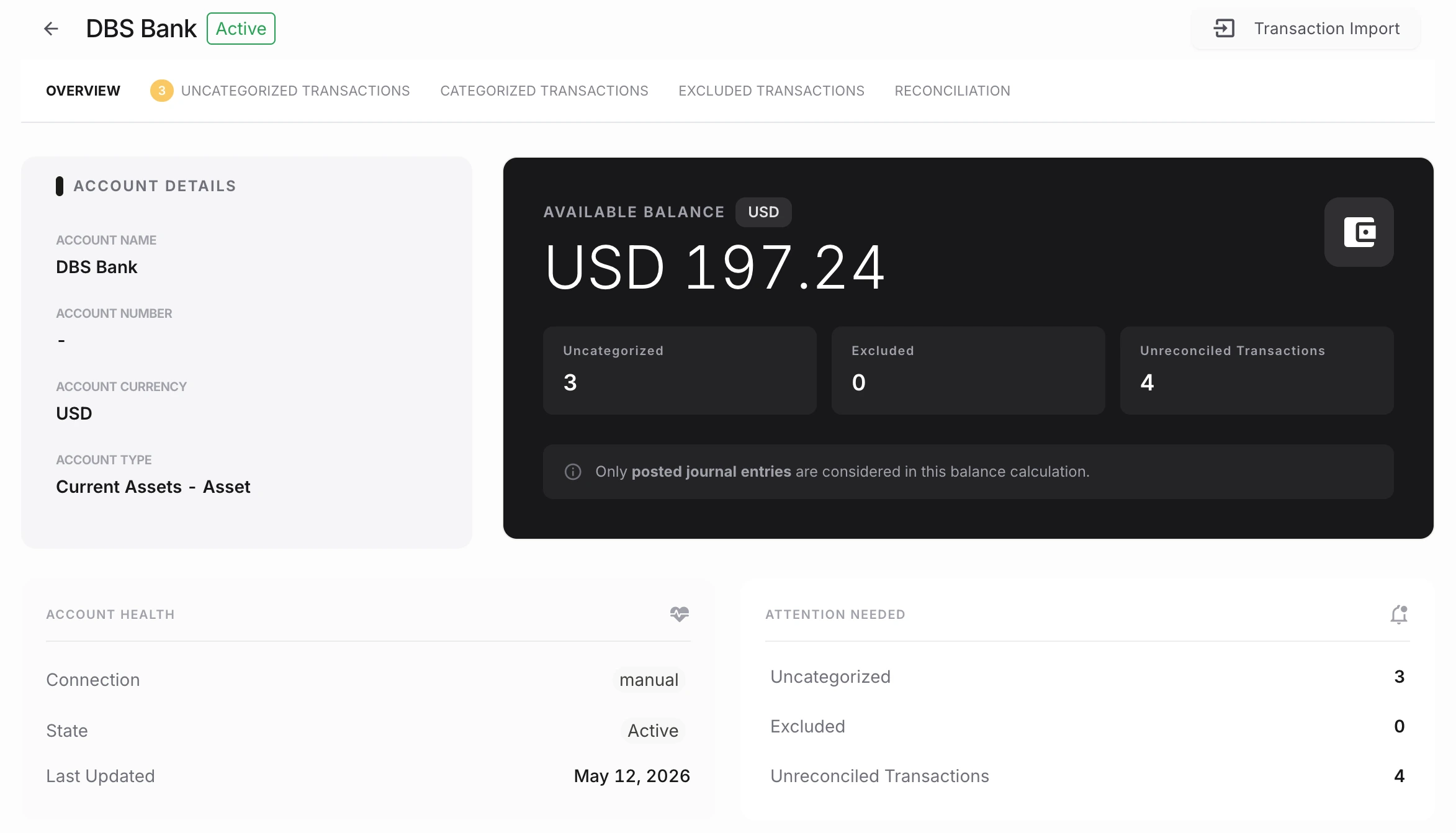
Match bank activity to posted records and route material bills, journals, and adjustments to the people accountable for them.
Resolve open work, control the period, and produce financial statements from the same ledger the team just reviewed.
Explore the product surfaces that connect transaction entry, bookkeeping, reconciliation, financial control, and reporting.
Bill customers and post adjustments from the same invoicing tools used across NewLedger.
Online invoicingCapture costs, keep an owner on larger items, and post them to the company ledger.
Expense trackingMatch deposits and payments to posted activity so cash and the P&L can be explained together.
Bank reconciliationRoute material journals, bills, and access changes to someone accountable, with a history you can follow.
Approvals and audit controlsP&L, balance sheet, and cash flow come from the records just reviewed.
Financial reporting softwareDaily posting, matching, and review is the accounting work—not a separate bookkeeping product.
Bookkeeping softwareAccounting software owns the ledger. Other systems may organise the practice, plan the future, collect operational data, or embed accounting inside another product.
This category
Keeps transactions, controls, reconciliation, and financial reports on a connected ledger.
This is NewLedger’s product category.
Adjacent
Organises proposals, jobs, time, billing, and capacity across an accounting practice.
It manages the practice; accounting software keeps the client books.
Accounting software for firmsAdjacent
Adds forecasts, scenarios, budgets, dashboards, and management analysis.
It interprets accounting results; it is not the underlying ledger.
Accounting software for finance teamsAdjacent
A software platform embeds a ledger inside its own product.
Headless infrastructure belongs with Paprel, not NewLedger.
Paprel embedded accountingNewLedger supports businesses keeping their own books, finance teams operating multiple entities, and accounting firms managing separate client ledgers.
Start freeStart with the operating context closest to your work: accounting firms, finance teams, or Paprel.
Daily accounting and financial reporting should use the same records
Reviewers need visibility into material transactions and changes
The team may operate one company, several entities, or separate client books
POS, payroll, CRM, and billing systems can remain connected or adjacent
Start with bookkeeping and reporting, then explore invoicing, expenses, reconciliation, permissions, multi-entity, multi-currency, and project accounting.
How invoices, bills, journals, and bank matches stay on a ledger someone can review before close.
Read the bookkeeping pathHow P&L, balance sheet, and cash flow come from the records just reviewed—not from a side spreadsheet.
Read the reporting pathIt is the system where a business records transactions, maintains its ledger, reconciles accounts, controls financial work, and produces reports. NewLedger connects those workflows in one accounting platform.
This page explains NewLedger's core accounting capabilities. The accounting-firms page focuses on operating separate client books, people, reviews, and close work.
This page explains NewLedger's core accounting capabilities. The finance-teams page focuses on applying them across entities, permissions, review workflows, and month-end close.
Start here for an overview of NewLedger's connected accounting workflows. The capability pages show how invoicing, bookkeeping, reporting, and controls work in practice.
No. Connect where a connector exists, then confirm coverage for your stack. Storefronts, payroll, and billing engines stay adjacent. NewLedger holds the accounting record.
No. NewLedger is accounting software people log into. Software platforms that need a headless ledger inside another product should evaluate Paprel.
Product information reviewed 2 September 2026. Confirm connector availability and rollout requirements for your organisation.
Start with the workflows your team needs today, then confirm integrations, permissions, entity structure, and rollout details for your organisation.